March 2026 Historic Heatwave Forecast Update
Historic March Heatwave – All You Need to Know
Valid 3/18/2026 6PM MDT
A historic March heatwave is about to take hold across Denver, the I-25 corridor, and much of the Front Range, with temperatures likely pushing well into the 80s through Saturday and threatening not just daily records, but all-time March records in some locations. This is not just a typical early-season warm spell.
The atmosphere over the western United States is setting up more like the middle of summer, with an unusually intense ridge of high pressure building overhead and 500mb heights reaching levels that are impressive even for June or July. At the surface, that translates to full sunshine, very warm downslope flow, extremely dry air, and a rapid warmup each afternoon. For the Front Range and nearby plains, this is shaping up to be one of the most unusual March heat events on record.
How Unusual This Is for March
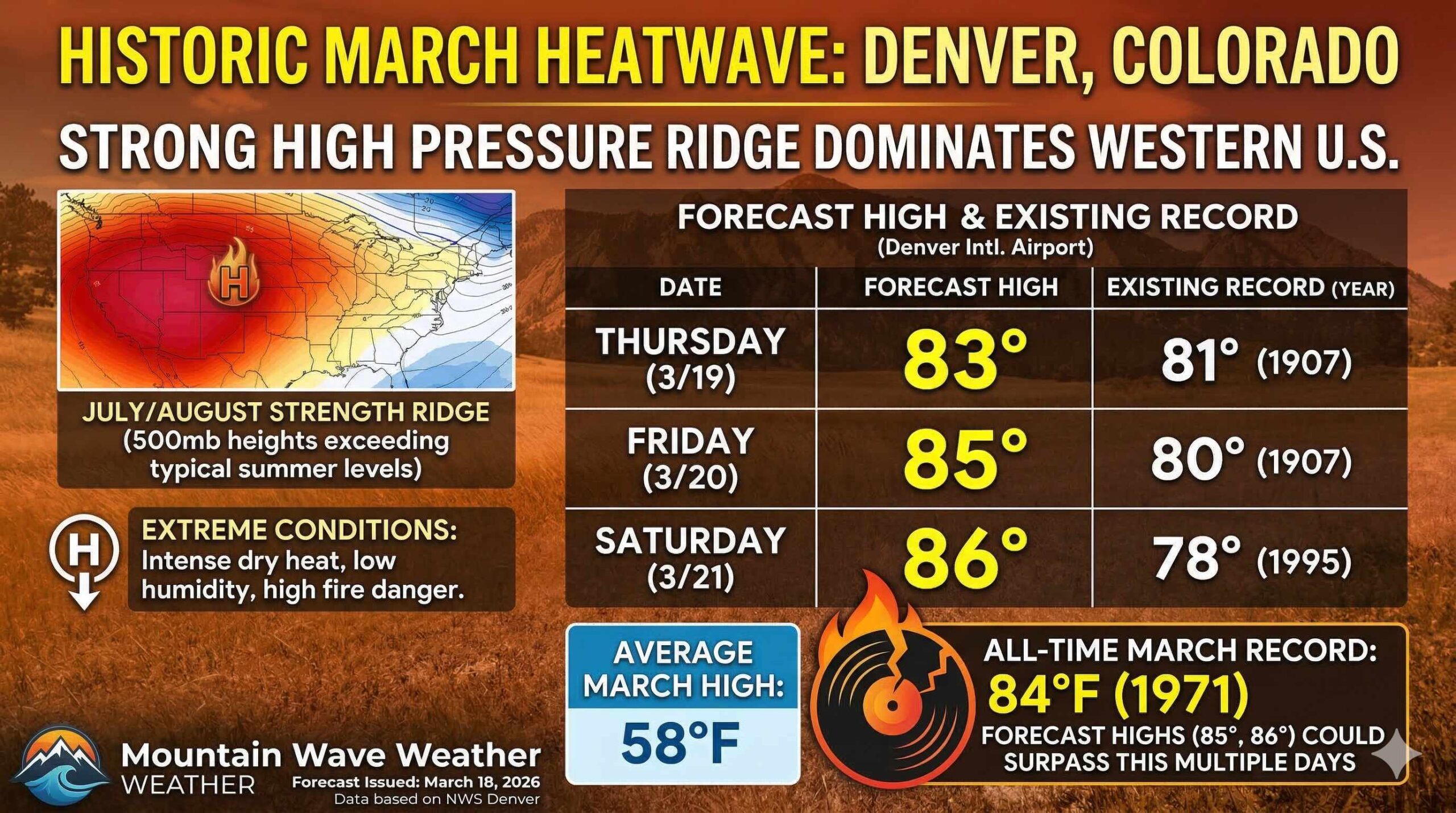
This is where the forecast really starts to stand out. Average highs in Denver during March are around 58 degrees, so temperatures in the middle and upper 80s are not just a little above normal — they are running roughly 25 to 30 degrees warmer than what you would typically expect this time of year. That is a major departure for late March, especially for a stretch lasting several days.
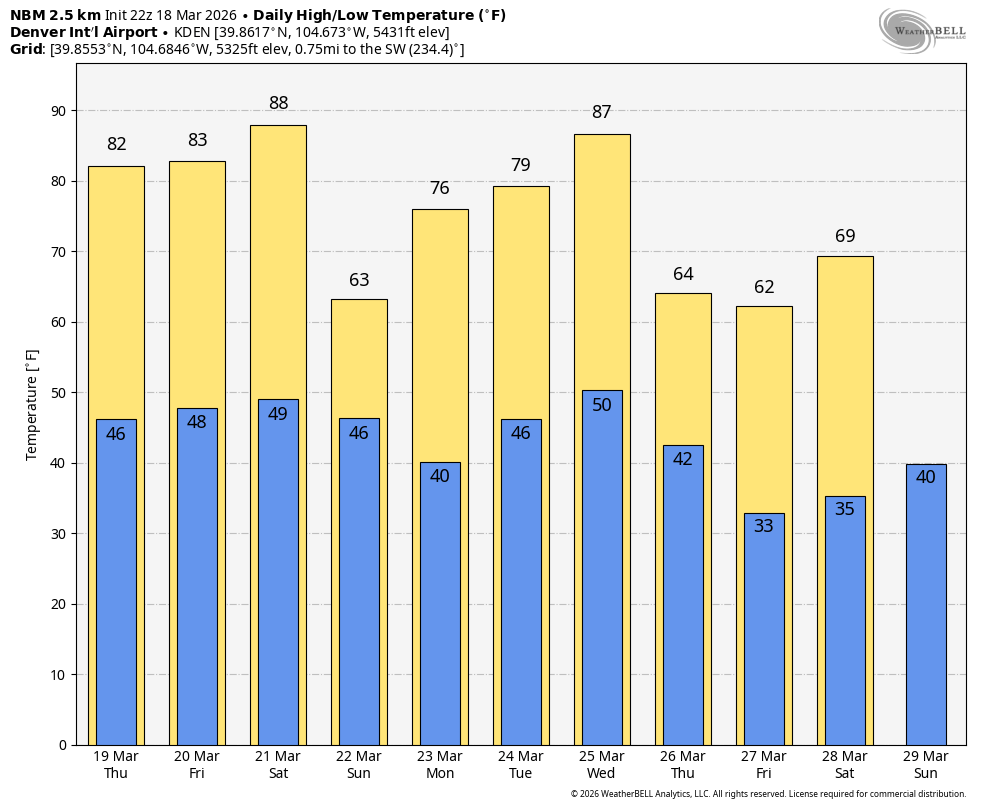
In Denver, the forecast high is around 83 Thursday, 85 to 86 Friday, and the mid to upper 80s by Saturday. That puts daily record highs in serious jeopardy all three days, and it also brings the all-time March record into play. The current March record in Denver is 84 degrees, set in 1971, so even a forecast in the mid 80s would move this event into rare territory very quickly.
And this is not just a Denver story. Similar numbers are showing up across the Front Range and northeast Colorado, with Boulder, Fort Collins, Greeley, Fort Morgan, and other nearby locations also expected to push to or beyond their warmest March temperatures on record. In several spots, forecast highs are running four to five degrees above existing monthly records, which is a pretty remarkable margin for a climate record.
What makes that even more notable is that this is happening in March, not in late spring or summer. The upper-level pattern in place over the western U.S. is more typical of a much warmer time of year, and that is why this heat is better described as historic rather than just unusually warm.
The How and Why of 500mb Heights
What Are 500mb Heights, and Why Do Forecasters Care?
When meteorologists talk about 500mb heights, they are referring to the height in the atmosphere where air pressure drops to 500 millibars, which is about half of the pressure we have at the ground. On average, that level sits around 18,000 feet above sea level, though it can be higher or lower depending on the temperature of the air below it.
The basic idea is pretty simple: warmer air expands, so it takes up more space vertically. When the atmosphere is very warm, the 500mb pressure level is found at a higher altitude. When the atmosphere is colder, that level sits lower. So when forecasters see very high 500mb heights, that is often a sign of a warm, expanded atmosphere and usually a strong ridge of high pressure.
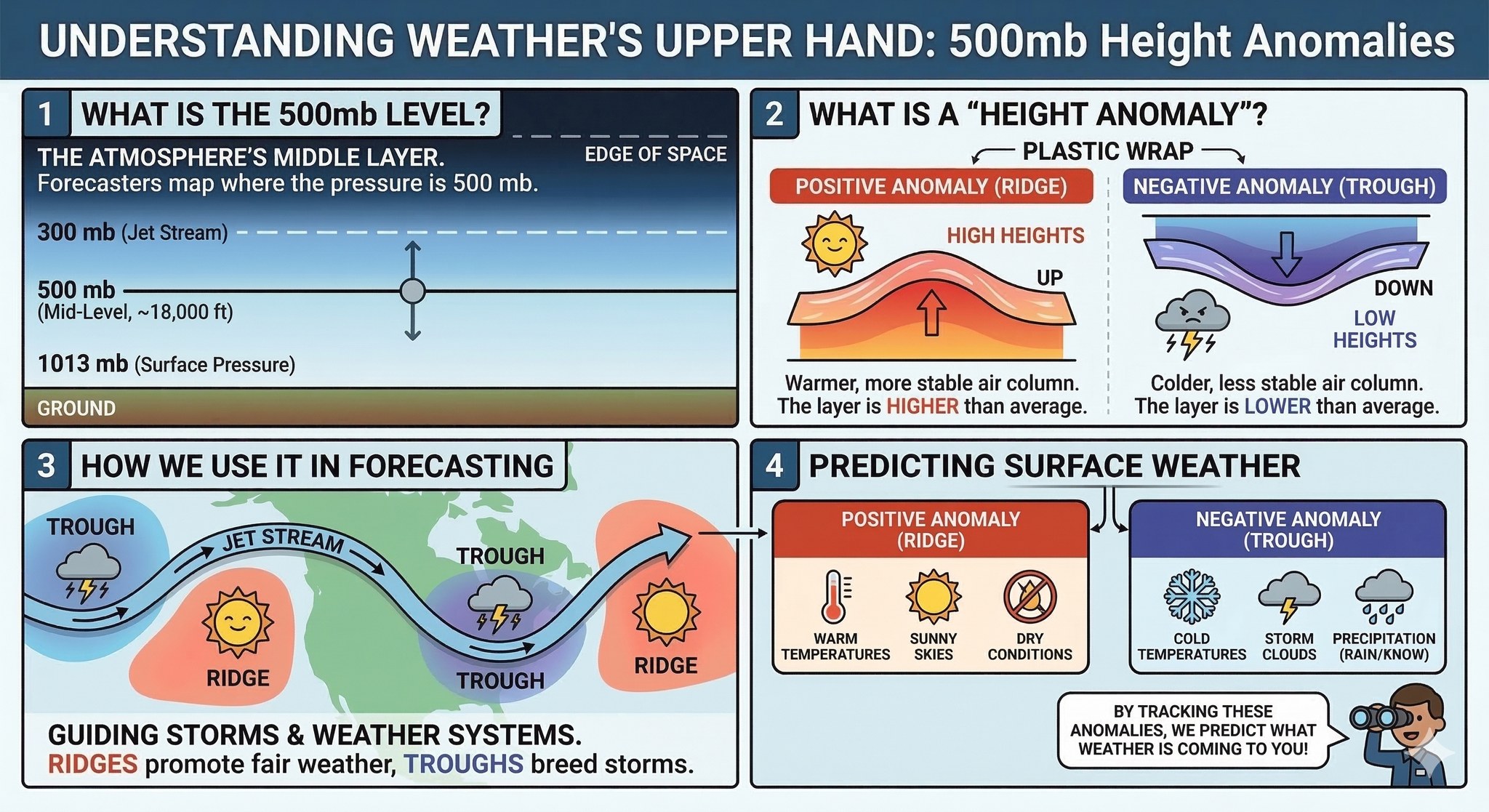
That matters because the 500mb level is a useful way to track the larger-scale weather pattern. It helps show where ridges, troughs, storm systems, and jet stream features are setting up. A strong ridge at 500mb usually favors sinking air, warmer temperatures, and quieter weather, while a trough often points to cooler, more unsettled conditions.
In this case, 500mb heights over the western U.S. are rising to levels that are unusually high for March and notable even for summer. That tells forecasters the atmosphere is exceptionally warm and strongly ridged aloft, which is one of the main reasons Colorado is headed into such an extreme early-season heat event.
Mountain Impacts: Rapid Snowmelt and Changing Conditions
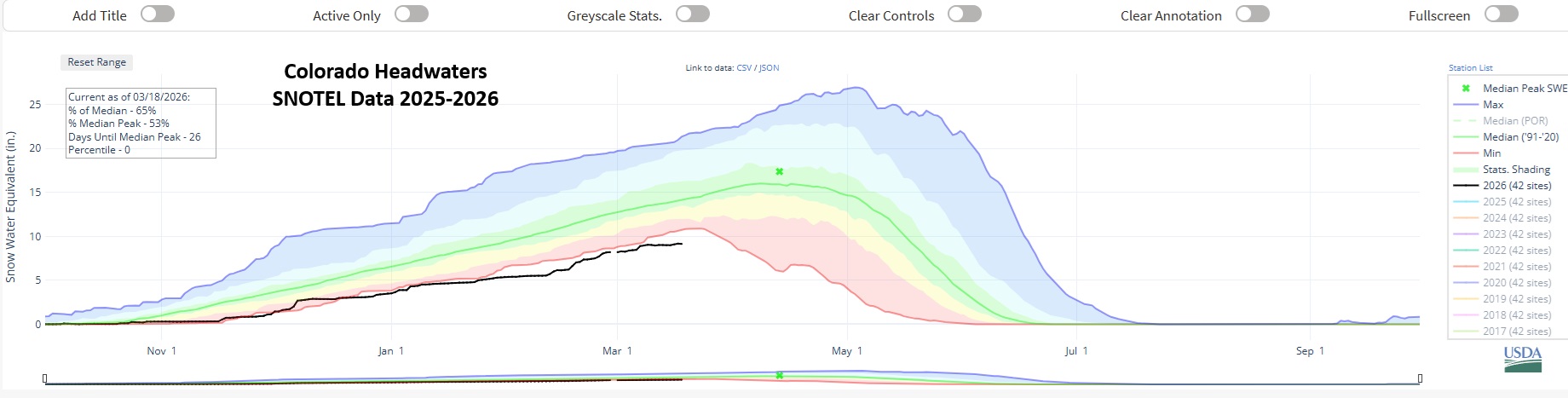
While the biggest headlines from this heatwave will likely come from Denver and the Front Range, the mountains will feel the effects too. With temperatures running far above normal for March and overnight recovery limited in some areas, lower and mid-elevation snowpack is likely to melt quickly over the next several days. That is an unusually early push of snowmelt for this point in the season.
For people heading into the mountains, that means snow conditions will change in a hurry. Snow that may still be relatively firm early in the day can turn soft and sloppy much faster by afternoon, especially on south-facing slopes and at lower elevations. Areas that have already seen early melt-out will continue to lose snow cover, and conditions on trails, mountain roads, and around recreation areas could get messy as the day wears on.
This does not mean a full spring melt pattern is suddenly underway everywhere, since higher elevations still have deeper snowpack to work with. But it does mean this stretch of heat will take a noticeable bite out of lower elevation snow and speed up melt much earlier than normal. For March, that is another sign of just how unusual this pattern is.
National Blend of Models Daily High/Low Temps
If you wanted to see the bigger picture, I’ve attached the daily High and Low Temps from the National Blend of Models. This model smooths out the outliers and is pretty good when making a forecast. Since we can see all the other things at play, I’d say temperatures end up pretty close to these values.
Want to Know More? Check Out These Related Articles!

About the Author
Meteorologist John Braddock
Position